


Book Review: Mammals by Frans Vermeulen

Published by Saltire Books, 2026.
By: Atiq & Naila
Co-founders, Homeopathy in Practice
Facebook: homeopathyinpractice
Instagram:
@like_treatslike
@homeopathyinpractice
Instagram:
@homeopathnaila
@homeopathyinpractice
There are some books in homeopathy that do not simply add to our knowledge, they change the quality of our seeing.
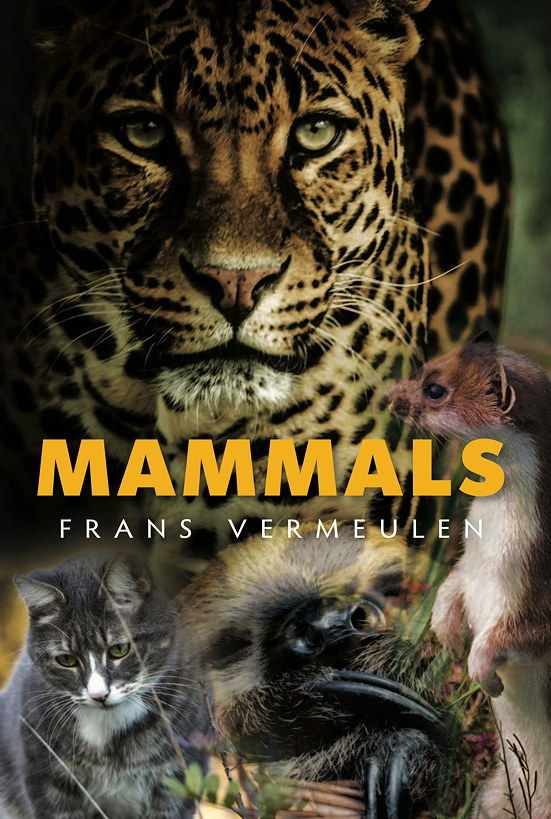
Frans Vermeulen’s Mammals is one of those rare works. It is a materia medica, certainly, and an impressive reference book, but it is also something more intimate than that. It feels like entering a landscape. Not a neatly arranged museum of animal remedies, but a living wilderness where instinct, behaviour, survival, relationship, fear, protection, tenderness, power, and vulnerability all begin to speak.
From the first pages, the reader is drawn into a deeper way of looking. Vermeulen does not merely describe remedies. He gives each animal space to reveal itself. The creature is allowed to move in its own environment, with its habits, its needs, its defences, its social order, its solitude, its loyalties, and its wounds. Through this, the remedy picture becomes more than a collection of symptoms. It becomes recognisable as a way of being.
This is what makes the book so valuable for practice.
As homeopaths, we often meet patients whose suffering cannot be understood by symptoms alone. There is a story behind the symptom, a posture towards life, a way of surviving, attaching, withdrawing, protecting, pleasing, dominating, hiding, grieving, or longing. In such cases, the animal remedies can open a very particular door. They help us perceive the instinctive layer of the person, not in a crude or simplistic way, but with sensitivity and respect.
Mammals gives us a language for that layer.
The loyalty of the dog, the watchfulness of the wolf, the sovereignty of the lion, the solitude of the snow leopard, the herd instinct, the mothering impulse, the need for belonging, the fear of abandonment, the wound of exclusion, the struggle for rank, the hunger for touch, all these themes are explored in a way that feels clinically alive. They are not presented as fixed labels. They are shown as movements of life.
What we especially appreciate is Vermeulen’s capacity to bring together biology, behaviour, mythology, anthropology, provings, affinities, and clinical observation without losing the soul of the subject. The writing carries the weight of study, but not the dryness of mere information. It is scholarly, but still warm. Detailed, but still readable. Vast, but never empty.
This matters because animal remedies can so easily be misunderstood. They can be reduced to ideas of competition, jealousy, sexuality, aggression, domination, or instinct. Vermeulen’s treatment is far more refined. Mammalian life is also about attachment, care, play, memory, dependency, grief, social intelligence, protection, bonding, and the delicate balance between closeness and freedom.
For the practitioner, this opens many doors.
One begins to listen differently. Where does this patient feel unsafe? What kind of connection do they seek? What happens when attachment is threatened? Do they defend, submit, disappear, charm, cling, attack, isolate, or watch from a distance? Is the central issue territory, belonging, hierarchy, abandonment, protection, touch, loyalty, or survival?
These are not questions that replace repertory work or materia medica study. They deepen them. They help us understand why a remedy may be needed, not only what symptoms it covers.
At over sixteen hundred pages, Mammals is a substantial work. It includes hundreds of mammal remedies and offers an enormous body of biological, clinical, and thematic material. Yet its value is not only in its size. Its real gift lies in the way it gathers the mammal kingdom into a coherent field of understanding. One can use it as a reference, but also as a companion in study, teaching, case reflection, and remedy differentiation.
For students, it offers a way into animal remedies that is structured and imaginative. For teachers, it provides rich material for exploring kingdom themes with depth. For practising homeopaths, it becomes especially useful in cases where the patient’s language carries instinct, attachment, defence, vulnerability, territory, rank, dependence, or a strong sense of animal presence.
For us, this is one of those books that does not quite return to the shelf. It remains close at hand. Each reading brings something new: a behavioural detail, a clinical insight, a comparison between species, a deeper understanding of how the animal world may echo within human experience.
This is the mark of a meaningful materia medica. It does not simply give answers. It refines perception.
Frans Vermeulen has offered the profession a remarkable work, generous in scope, careful in structure, and full of insight. Mammals expands our understanding of animal remedies, but more than that, it deepens our respect for the instinctive, relational, vulnerable, and courageous dimensions of the human heart.
A powerful, beautifully considered, and essential book.
We cannot recommend it highly enough.
Atiq & Naila
Homeopathy in Practice
To purchase, visit: https://www.saltirebooks.com/shop/author/frans-vermeulen/mammals


Comments